Tiles Lifting or Tenting Up Off the Floor? The Pressure Problem Behind It
July 31, 2026
Quick Answer: When floor tiles lift or tent into a ridge, it is because the tile has expanded with nowhere to move, so the trapped pressure forces it upward until it pops off the subfloor. Ceramic and stone tile grow slightly with heat and moisture, and when the installation has no movement joints at the walls or across the field, that growth has nowhere to go and builds until the bond lets go. It usually follows years of expansion-and-contraction cycles rather than one event, and the lasting fix is relieving the pressure, resetting or re-bonding the tile, and adding movement joints so it cannot build up again.
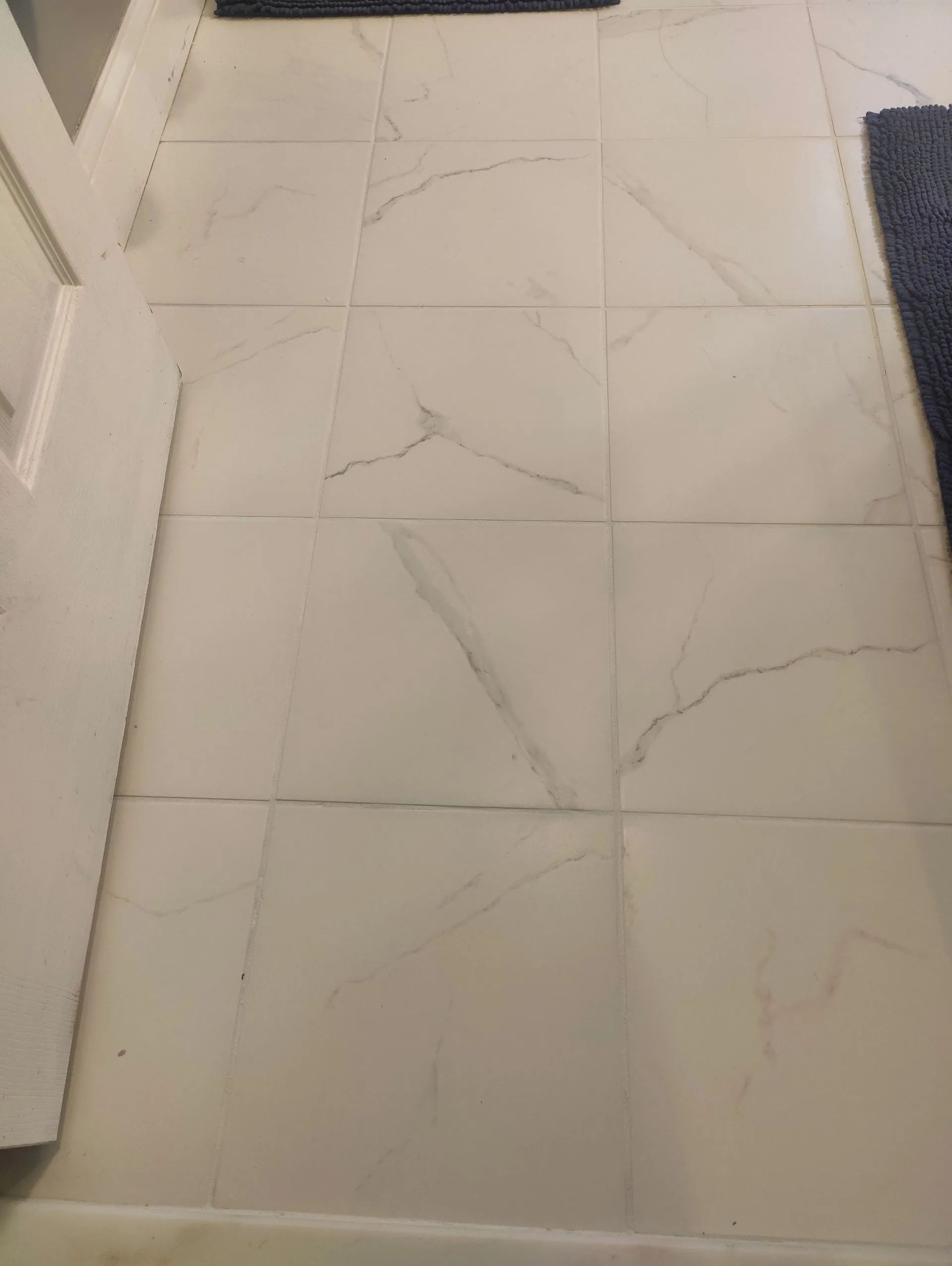
You are walking across the kitchen and you feel it before you see it: a tile that rocks, then a ridge where two tiles have pushed up against each other and lifted off the floor. Sometimes it announces itself with a sharp crack in the middle of the night, loud enough to make you think something fell. By morning there is a small peak in a floor that was dead flat for years, and it seems to be getting worse, not better.
Tile that lifts or tents like this is one of the more alarming things a floor can do, because it looks like the tile itself failed. It did not. What you are looking at is pressure that had nowhere else to go. The tile grew, something held it in place, and the only direction left was up. Once you understand that, the whole thing stops being a mystery and starts pointing straight at the fix. This shows up regularly in the Boston area and across the North Shore, where humid summers, cold winters, and older homes give tile plenty of reasons to move.
The Pressure Has Nowhere to Go
Tile feels permanent, but it is not perfectly still. Ceramic, porcelain, and stone all expand and contract a little as temperature and moisture change around them. That movement is tiny on any given day, but it is real, and a properly built floor is designed to absorb it.
Tile is a facade over a substrate that moves too
The tile might look like one solid surface, but it sits on a substrate that shifts and moves on its own. The two do not grow and shrink at the same rate, so stress quietly builds between them. Movement joints are meant to absorb that stress before it becomes a problem.
Expansion turns into compression turns into an upward shove
Here is the mechanics of a tent. When tile expands and it is boxed in with no room to grow, it goes into compression, squeezing tighter against the tiles and walls around it. Something has to give. Eventually the bond lets go and the whole tile lifts into a ridge.
A weak bond gives out sooner
How well the tile was stuck down in the first place decides how much stress it can take before it lets go. A tile bonded solidly to a clean, prepared subfloor resists that upward force far longer than one set over dust or a poor bed. Weaker bonds pop first.
Why the Pressure Builds in the First Place
Tenting is almost never a single failure. It is usually several conditions stacking up until the floor runs out of room. These are the ones a specialist looks for first.
No movement joints at the perimeter or across the field
This is the big one. A floor needs a gap at the walls and other restraining surfaces, often hidden behind the baseboard, so the field of tile can grow toward the edges without slamming into something solid. When tile is butted hard against every wall with grout, the floor becomes one rigid slab.
A porous tile body that drinks in moisture
Not all tile expands the same amount. A porous ceramic with a soft clay body absorbs more moisture and swells more than a dense, harder-bodied tile. Those thirstier tiles have a much greater tendency to tent, because they move more when humidity climbs, which is exactly what a damp coastal summer brings.
A hidden moisture source under the floor
Moisture does not only come from the air. A concrete slab can wick ground moisture up into the tile for years. A slow leak, a damp basement, or water traveling under the tile from somewhere else feeds the same swelling. In many tenting cases the tiles that lift are darkened underneath from sitting wet.
Heat and direct sunlight
Temperature swings drive the same expansion. A floor that heats up in strong sun through a window, or over a heat source, expands and then contracts as it cools, cycling in and out like an accordion. Where tile gets that kind of direct exposure, it needs far more room to move, because the daily movement is greater.
Substrate shrinkage pulling the floor tight
Sometimes it is not the tile growing but the layer beneath it shrinking. A concrete slab that continues to cure and shrink can pull the field of tile tighter over time. One way specialists confirm this is to lift the tented tiles and try to set them back. If they no longer fit, the substrate moves.
Tip: Pay attention to where the tent forms and what the room does. A ridge that runs down the middle of a long, unbroken run of tile, or one that shows up in a sunny kitchen or a room over a damp slab, is almost always a movement-and-moisture story rather than a bad batch of tile. Noting whether the lifted tiles are damp or discolored on the back, and how long the unbroken tile run is between walls, gives a specialist a strong head start on finding the real cause.
What Grout and Movement Joints Have to Do With It
A lot of homeowners assume the grout lines already give the floor room to move. They do not, and understanding the difference is the key to a repair that holds.
Grout is rigid, not a shock absorber
Cement-based grout is hard and inflexible. It fills and seals the joints, but it does not compress or flex to absorb movement. A floor packed solid with grout out to every wall has no relief anywhere, which is exactly what tents.
A movement joint is a soft, flexible gap
A true movement joint is different from a grout line. It is left free of grout and filled instead with a resilient, flexible sealant, usually over a foam backer rod, so it can stretch and squeeze. That flexibility lets the tile move a hair without loading up.
The joints have to be honored, not covered
A movement joint only works if it stays soft and open to move. Grouting over it, or caulking it with a hard product, defeats the purpose. Part of a proper repair is putting these joints back and keeping them resilient so the floor can breathe.
Warning: If your tile is actively tenting, keep traffic off the ridge and do not try to walk it flat or force the peak back down. A tile under that much compression can shatter underfoot, and the shards are sharp. Prying up or grinding at tented tiles yourself can also spread the failure fast; more than one homeowner has watched a small tent turn into a whole floor of loose tile once they started pulling. When a floor is lifting, get it assessed before more tiles let go.
How the Problem Gets Diagnosed and Fixed
Because tenting comes from a stack of causes, sorting it out takes looking at the whole floor, not just the tile that popped. The good news is that a lifting floor does not automatically mean tearing the whole thing out.
The first job is relieving the pressure. Tented tiles are carefully removed so the trapped compression is released and the field relaxes back toward flat. From there a specialist reads what the floor is telling them: whether the removed tiles are damp underneath, whether they still fit back in their original footprint, how the tile is bonded, and whether the run of tile ever had a place to move. That points to the real driver, whether it is a missing perimeter joint, a moisture source, a porous tile, or a shrinking slab.
The repair then addresses the cause rather than the symptom. Sound tiles are reset or re-bonded to the subfloor, and, this is the part that keeps it from coming back, movement joints are cut in where they were missing: a resilient gap at the perimeter and joints across a long field so the tile finally has somewhere to expand. Where moisture is feeding the problem, the source has to be found and diverted, because no repair holds over a floor that stays wet. This restore-first approach saves the sound tile and the original look of the floor, correcting the flaw in how it was built instead of ripping out a floor that is mostly fine. Only when the failure is truly systemic across the whole installation does full replacement make sense.
Frequently Asked Questions
Why did my tile suddenly tent up after years of being fine?
Tenting is a fatigue problem, not a sudden one. A floor with no room to move absorbs small expansion cycles year after year until the stress finally exceeds the bond and the tile releases all at once.
Is a tented floor a foundation problem?
Usually not. Tenting is almost always a tile installation issue rather than a foundation one, most often a lack of room to move combined with tile that expanded from heat or moisture. Many homeowners are told they need foundation work unnecessarily.
Can lifted tiles be saved, or does the whole floor have to come out?
Often they can be saved. In many cases the tented tiles are removed to relieve the pressure, then sound tiles are reset or re-bonded and given room to move so it cannot happen again. Full replacement is rarely needed.
Why does gluing the tile back down not work?
Because it does nothing about the pressure that pushed the tile up in the first place. The tile is still boxed in with nowhere to expand, so the same force builds again and lifts that tile or the one beside it.
Does the type of tile make tenting more likely?
Yes. A softer, more porous tile absorbs more moisture and expands more than a dense, harder-bodied one, so it has a greater tendency to tent under the same conditions. Moisture-prone and sun-exposed floors with softer tile are most at risk.
What actually stops tiles from tenting again?
Room to move. The floor needs a resilient, flexible gap at the walls and across a long field, rather than rigid grout everywhere, so the tile can expand a little without loading up. Correcting any moisture source and re-bonding loose tile finishes it.
Giving the Floor Room to Move
A tile that lifts and tents is not a sign the tile failed. It is a sign the floor ran out of room. The tile grew, something held it captive, and the pressure escaped the only way it could, straight up. Once you see it that way, the path forward is clear: relieve the pressure, re-bond or reset the sound tile, find and stop any moisture feeding the swelling, and cut in the movement joints that give the floor somewhere to go. Do that, and the ridge in the middle of your floor becomes a problem you solved instead of one you keep resetting.
Schedule a tile re-bonding assessment — When your tile is tenting, the pressure lifting it is still trapped beneath the floor, so simply gluing it back down only delays the next failure. With Several years of experience serving Boston, Massachusetts, The Groutsmith relieves built-up pressure, re-bonds sound tiles to the subfloor, identifies moisture causing movement, and installs the proper movement joints to help prevent future lifting. Reach out today to schedule a tile re-bonding assessment and restore your floor instead of replacing it.